
Oil on canvas Signed 53 x 106 cm
Oil on canvas Signed 53 x 106 cm
Oil on canvas Signed 53 x 106 cm

Acrylic on canvas 30.5 x 30.5 cm
Acrylic on canvas 30.5 x 30.5 cm
Acrylic on canvas 30.5 x 30.5 cm
Acrylic on canvas 30.5 x 30.5 cm
Acrylic on canvas 30.5 x 30.5 cm
Oil on canvas Signed 53 x 106 cm

Oil on Canvas 47.6 x 48.3 cm
Oil on Canvas 47.6 x 48.3 cm

Gouache on Paper 75 x 55 cm

Gouache on Paper 75 x 55 cm
Gouache on Paper 75 x 55 cm
Gouache on Paper 75 x 55 cm

Acrylic on Canvas 91.4 cm x 61 cm Signed lower right; titled and dated verso; unframed
Acrylic on Canvas 91.4 cm x 61 cm Signed lower right; titled and dated verso; unframed
Acrylic on Canvas 91.4 cm x 61 cm Signed lower right; titled and dated verso; unframed
Acrylic on Canvas 91.4 cm x 61 cm Signed lower right; titled and dated verso; unframed

Acrylic on Canvas 91.4 cm x 61 cm Dated 1996 Signed lower right, Titled and dated verso, Unframed
Northwest Coast
Inuit Sculpture Artist Unknown

Sedna Soapstone
Sedna Soapstone
High Fired Pottery 27.5 cm x 18.7 cm x 18.7 cm

Acrylic Painted Skull 44 cm x 20 cm

Oil on canvas Signed; Numbered 12-06 76 x 58 cm
Oil on canvas Signed; Numbered 12-06 76 x 58 cm

Watercolor Signed Dated 1993 36 x 28cm
Watercolor Signed Dated 1993 36 x 28cm
Watercolor Signed Dated 1993 36 x 28cm
Watercolor Signed Dated 1993 36 x 28cm

Rosewood Tables 78 cm x 150 cm x 54.5 cm
Rosewood Tables 78 cm x 150 cm x 54.5 cm
Rosewood Tables 78 cm x 150 cm x 54.5 cm
Rosewood Tables 78 cm x 150 cm x 54.5 cm
Rosewood Tables 78 cm x 150 cm x 54.5 cm

Oil on canvas 57.2 x 85.5 cm

Oil on Board Signed Dated 1962 90 cm x 65 cm
Oil on Board Signed Dated 1962 90 cm x 65 cm

Coloured pencil on paper 24.1 x 18.4 cm 2015

Sunburst Mixed Media on Board 122.5 x 99 cm
Sunburst Mixed Media on Board 122.5 x 99 cm
Bobbie Burgers
Bobbie Burgers is a contemporary Canadian painter. Her lush and Expressionistic depictions of flowers teeter on the verge of abstraction, bursting with bright color and laden with thickly applied, textural paint. “Flowers, to me, are the opposite of still,” the artist has explained. “Changing from minute to minute, they are perfect symbols for life, death, yearning, and beauty. My brushstrokes are layered with my own internal charges, depicting anger, frustration, softness, wanting, and more.” Born in 1973 in Vancouver, Canada, she studied Art History at the University of Victoria in British Columbia. Her work has been exhibited widely at home and abroad, notably including Art Market San Francisco and Equinox Gallery. Today, her works are in the collections of the Berost Corporation in Toronto and the Royal Bank of Canada, among others. Burgers lives and works in Vancouver, Canada.
Bobbie Burgers
Bobbie Burgers is a contemporary Canadian painter. Her lush and Expressionistic depictions of flowers teeter on the verge of abstraction, bursting with bright color and laden with thickly applied, textural paint. “Flowers, to me, are the opposite of still,” the artist has explained. “Changing from minute to minute, they are perfect symbols for life, death, yearning, and beauty. My brushstrokes are layered with my own internal charges, depicting anger, frustration, softness, wanting, and more.” Born in 1973 in Vancouver, Canada, she studied Art History at the University of Victoria in British Columbia. Her work has been exhibited widely at home and abroad, notably including Art Market San Francisco and Equinox Gallery. Today, her works are in the collections of the Berost Corporation in Toronto and the Royal Bank of Canada, among others. Burgers lives and works in Vancouver, Canada.

Oil on canvas Signed 32 x 39 cm
Oil on canvas Signed 32 x 39 cm

Oil on board 44 cm x 45 cm
Oil on board 44 cm x 45 cm

Oil on Canvas Dated 2012 75 cm x 57cm
Oil on Canvas Dated 2012 75 cm x 57cm

Oil Signed .Titled 88 x 120 cm
Oil Signed .Titled 88 x 120 cm

Mixed Media and Collage on canvas Signed Dated 16 163 cm x 160 cm
Mixed Media and Collage on canvas Signed Dated 16 163 cm x 160 cm
Mixed Media and Collage on canvas Signed Dated 16 163 cm x 160 cm
Oil on canvas Signed 53 x 106 cm

Acrylic on Board Signed 44 cm x 40 cm
Acrylic on Board Signed 44 cm x 40 cm
Colour Pencil on Paper Signed 16 cm x 11 cm
High Fired Pottery 27.5 cm x 18.7 cm x 18.7 cm
Signed Oil 24 cm x 35 cm
Contemporary South African Art
Tretchikoff, Vladimir
Witch Doctor
This painting appears to be unique in Tretchikoff’s body of work. At first glance, it could fit into his gallery of ‘exotic’ portraits of black South Africans that he regularly expanded throughout his career in this country. The artist would dress his urban models in diverse items of ‘traditional’ African clothing, add European jewellery for good measure and end up with pastiches that were visually pleasing to admirers of his work. It would seem that the ‘witch doctor’ in this painting wears a similar outfit, a product of Tretchikoff’s imagination. He was known to disregard cultural significance and authenticity, embellishing the look of his African models according to his taste and ideas of beauty. We see a similar approach in his iconic Chinese Girl, whose permed hair and Western-style make-up suggested the emancipated Asian woman of the mid-twentieth century while her heavy embroidered robe dated back to the times when women in China still bound their feet.
Yet, apart from the Witch Doctor, I do not know of any other African portrait of his in which Tretchikoff expressed his fascination with magic, occultism and the supernatural. Readers of his autobiography would remember that ‘13’ was his lucky number, and he tried to time important events so that they would take place on the thirteenth day of the month. His international success was foretold to him at a séance in Jakarta during World War II. Even the title of his book, Pigeon’s Luck, referred to a supernatural occurrence. Before his first exhibition in South Africa, a pigeon came to live on the balcony of his flat and left only after that show made him a celebrity. Tretchikoff’s interest in the irrational emerged in China, where he spent his teenage years. His early graphic work that appeared in Shanghai magazines in the 1930s often featured statutes of Buddha, meditating monks and dragons, mythical Chinese creatures remotely related to the serpent we see in the Witch Doctor. In the mid- 1970s, when the Witch Doctor was produced, Tretchikoff returned to these subjects. Monks and statues of Buddha reappeared for the first time in forty years in the canvases he showed at his exhibitions in England and Scotland.
The highlight of his last display of new work (1978) was a series of paintings called The Ten Commandments– allegorical interpretations of the biblical laws. It would have been inspired by the Rosicrucian teachings: Tretchikoff was a member of the Good Hope Chapter in the 1950s. The order sponsored his first show in the US.
The original owner of the Witch Doctor purchased this canvas in Durban in 1976. It was the last exhibition tour of South Africa for Tretchikoff. Shunning ‘elitist’ art galleries, he showed at a department store as he always did. His exhibition opened in June on the first floor of Greenacres, where, as his adverts promised, admirers could ‘see his controversial canvases and meet him in person daily’. It came to be the best-attended Durban show of his career. Nearly fifty thousand visitors saw the Witch Doctor within the five weeks it was on display.
Never recognised in his lifetime for what he was worth, South Africa’s leading purveyor of ‘mass-market masterpieces’, Tretchikoff remained a pariah in the country’s art circles. ‘I would like them to admit I am an artist’, he told a Durban newspaper during the exhibition. To verify his claim, the journalist asked Chand Singh, the doyenne of South African palm readers, to study Tretchikoff’s hand. After a thorough examination of his Head Line, Singh pronounced, ‘Of course, he is an artist.’ Viewed in this context, the Witch Doctor reflects the artist’s lifelong interest in spirituality that intensified in the period when this work was produced.
-Boris Gorelik
Vladimir Tretchikoff was born in Petropavlovsk in 1913, but fled with his family in 1917 before the Russian Revolution, where he graduated as a painter. In Shanghai, he married the Russian Natalie Telpregoff, who had also fled from the communist regime in 1935. They moved together to Singapore, and when Mimi was born three years later, he was already established as a cartoonist and painter. The peaceful life of the young family ends abruptly in 1941 with the invasion of the Japanese in Singapore; Natalie and Mimi are evacuated to an unknown place. Tretchikoff himself tries to escape via the sea route to Java, where he can follow his artistic career - after a temporary internment by the Japanese.
Tretchikoff often described his style as "symbolic realism", which is nowhere more apparent than in his flower studies. For the first time, he painted them in Java, inspired by the rainbow-like colors of the cannula in his garden, as can be seen in the work offered here.
The model for this portrait was Leonora Frederique Henriette Moltema-Salomonson, a half Indonesian, half Dutchwoman presented to him in 1944. Lenka, as he calls her tenderly, embodies feminine beauty ideals in her mixture of East and West Tretchikoff, and soon becomes his source of inspiration, his muse, and his beloved.
Only two years long, Tretchikoff finds the traces of his wife and his eight-year-old daughter in South Africa, and it was the agreement that he would leave Java and thus also Lenka in this case. From Java he takes all his paintings, the "Lady of the Orchids" is one of the rare exceptions. This was acquired by Herbert W. Schmidt, a Swiss citizen living in Djakarta, who worked there for a Dutch company. He was a neighbor of the artist and wanted to support him with the purchase of the painting financially.
Vladimir Tretchikoff meets the South African taste of his time at his new home and work place and can sell his works well. In the fifties and sixties he succeeded in the great breakthrough in the USA, Canada and England, not least because his work "Chinese Girl" is reproduced thousands of times for the English-speaking world. This portrait, begun in Java and completed in South Africa, was sold at Bonhams in London for £ 840,000.
We would like to thank Boris Gorelik for the support of this catalog entry.
Tretchikoff is a household name in the English-speaking world. Remarkably, one of his most elusive paintings has resurfaced in Switzerland. Few people in this country are familiar with his work. Yet reproductions of Tretchikoff's Chinese Girl have adorned many thousands of homes in the United Kingdom, Australia, New Zealand, Canada, South Africa and the United States. His paintings rank among the most reproduced artworks of the mid twentieth century.
Tretchikoff, a Russian who was in Japan and engaged in oil painting in Southeast Asia, spent the most romantic period of his life in Jakarta during World War 2. After a spell in a Japanese prisoner-of-war, he was released by occupation Authorities and allowed to pursue his artistic career in Java.
One day, an anonymous admirer sent him a box of orchids. Those flowers, ten times as expensive as roses, were at the same time. For a few months, Tretchikoff received orchids twice every week. They were so many that they filled the house. The identity of the sender remained a mystery. The shop that delivered the fl owers. Tretchikoff regarded these gifts as an encouragement to continue painting. 'Somebody evidently had a faith in me', he remembered. 'And it' s like so much, when all around what desolation, poverty and suffering. ' He imagined his mysterious benefactor as a woman. With each new picture he produced, he wondered if she would like it.
The tretchikoff's tribute - her fictitious portrait. Tretchikoff, "Lady of the Orchids" afterwards. .
The flower in this picture is a Cattleya, 'the queen of the orchids'. Tretchikoff's celebrated "Lost Orchid" painting: the Cattleya warscewiczii. For its extraordinary size and splendor, this flower is better known as Cattleya gigas.
Tretchikoff is his style as 'symbolic realism'. Nowhere is this more prominent than in his fl ower studies. He first painted them in java, enchanted by the rainbow-like colors of cannas in the garden. In the "Lady of the Orchids", one of his earliest flower-themed works, cannas can be seen in the background.
Although in java, with its strong Muslim traditions, nudity was taboo, Leonora posed a semi-naked for this, one of his best paintings from his Javanese period. Leonora's unfinishing belief in his success helped Tretchikoff to persevere. His model and lover, she urged him to sell his paintings. Always interested in spiritualism, she took Tretchikoff to a séance.
We thank Mr. Boris Gorelik for this catalog entry.
Ref: Schuler Auktionen
Mysterious Admirer
Vladimir Tretchikoff's legendary 'Lady of the Orchids' has elusively resurfaced in Switzerland.
One of the most significant paintings of Vladimir Tretchikoff will be sold on 16 December by Swiss auction house Schuler in Zurich. Titled Lady of the Orchids, it is estimated at R870,000 - R1,160,000 (CHF 60'000 - 80'000).
The story goes that Tretchikoff, who grew up in China, spent the most romantic period of his life in Jakarta during World War II. After a spell as a Japanese prisoner-of-war, he was released by the occupation authorities and allowed to pursue his artistic carrer in Java.
One Day, an anonymous admirer sent him a box of orchids. Those flowers, ten times as expensive as roses, were an exorbitant present in a city where everybody eked out the little money they had just to survive. For a few months, Tretchikoff received orchids twice every week. They were so many that they filled the house. The identity of the sender remained a mystery. The shop that delivered the flowers refused to reveal the buyer's name. Tretchikoff regarded these gifts as an encouragement to continue painting. "Somebody evidently had faith in me", he remembered. "And it grew to mean so very much, when all around was desolation, poverty and suffering". He imagined his mysterious benefactor as a woman. With each new picture he produced, he wondered if she would like it. The sitter for Lady of the Orchids was Leonora Moltema-Salomonson. Half-Indonesian and half-Dutch. Leonora - or Lenka as Tretchikfoff affectionatley called her - for him, embodied "that intricate blend of the East and West, the mixing of women". Although in Java's strong Muslim traditions nudity was seen as taboo, Leonara posed semi-naked for the painting. According to Boris Gorelik, it is one of Tretchikoff's best paintings from his Havanese period. Leonara's unflinching belief in his esuccess helped Tretchikoff to perservere. His model and lover, she urged him not to sell his paintings so that he would be able to hold an exhibition after the war.
On his departure from Java in 1945, Tretchikoff took his Javanese canvases away with him. Again the Lady of Orchids was a rare exception, as the grandfather of the present owner, a Swiss who had moved to Java to work for a Dutch company bought it directly from the artistin order to support him. The legendary Lady of the Orchids has been in possession of the same family for three generations. Unlike other exceptional Tretchikoff canvases, it has never been exhibited or reproduced before.
The Forest Fire
The only known landscapes by Tretchikoff are his depictions of Cape mountain wildfires. In 1948, shortly after settling in South Africa, Tretchikoff held the first of his many exceedingly popular exhibitions in Cape Town and Johannesburg. In commercial terms, he soon became the country’s most successful artist. Half the works that Tretchikoff presented that year were produced in Indonesia, where he had been working during World War II, but in 1949, the Russian-born artist decided that the theme for his shows would be South Africa, his newly-adopted country. Not only was the subject matter purely South African, he even made use of indigenous materials in The Forest Fire and other works.
With his interest in the mysteries of death and resurrection and his penchant for intense colours, Tretchikoff was awed by the drama of Cape wildfires. In his work, flames usually represent the ultimate destructive force. This is evident in his most dramatic paintings – Atomic Age and The Atom – where raging fire spells the end of humanity. But Tretchikoff saw death as a new beginning. As in his often-reproduced Lost Orchid and Weeping Rose, when something beautiful perishes, a new life is bound to emerge in its place. No wonder that, in another canvas from the same series, The Spring, we see daisies sprouting through cracks in the dry soil among the blackened trunks of fallen trees after a blaze.
The frame for The Forest Fire was designed and crafted by Tretchikoff personally. He bought heavy blocks of Cape pine, which he transported to his studio in his car. He stripped off the bark, which timber merchants usually discard, trying not to break the brown gnarled surface. He then cut a rectangular hole in the large pieces of bark and used them to frame his Cape wildfire landscapes.
The Forest Fire was purchased by a sheep farmer from the Karoo, who bought several other works by Tretchikoff as well as paintings by Frans Oerder, Tinus de Jongh, Vernon Ward and Sir Russell Flint. The buyer was prompted by his seven-year-old daughter who accompanied him to Tretchikoff's studio. When he asked her which was her favourite painting, she pointed to The Forest Fire. The canvas has been in the family ever since.
Boris Gorelik

Oil on Canvas Signed 101 cm x 75 cm

Oil on Canvas Signed Dated Labeled Java Bottom Right 1944 98.5 cm x 75.5 cm

Oil on Canvas Signed 1973 86 cm x 96 cm

Oil on Canvas Signed and Dated 1952 Inscribed 75.5 cm x 63 cm

Oil on Linen 85.5 cm x 108.5 cm Signed Dated SA 53

Oil on Canvas Signed 65 cm x 121 cm
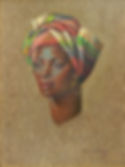
Oil on Canvas Signed 78 cm x 54.5 cm

Oil on Canvas Signed 80 cm x 108 cm
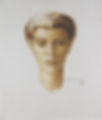
Oil on Canvas Board Signed 66 cm x 55.5 cm

Oil on Canvas 81.5 cm x 82 cm Signed Strauss April 2021

Oil Signed 105 cm x 105 cm

Oil on Canvas Signed 122 cm x 59.7 cm

Oil on steel Signed "Tretchikoff " 94.5 x 85 cm

Oil on Canvas Signed 115 cm x 59 cm
Oil on Canvas Signed 122 cm x 61.5 cm
Oil on Canvas 60 x 76 cm
Oil on Canvas Signed Dated 49' 65cm x 84cm

Color Lithograph on paper Signed; Dated 71 43 x 90 cm
Zulu Maiden
For the first time in half a century, these two paintings are to be presented on a South African auction. They were never part of a Tretchikoff exhibition in this country, although briefly displayed by the artist once outside Trust Bank, Cape Town, c1970s. By an arrangement with the artist, neither of these works have ever been reproduced in his illustratedbbooks or as lithographs for framing.
The pictures conclude two remarkable series that Tretchikoff started at the earliest stage of his painting career. The Balinese Dancer (lot 237) is the last of his depictions of island beauties, including the Balinese Girl, which became a bestselling print in Britain, Canada and elsewhere in the Commonwealth. The Zulu Maiden (lot 236) is his last portrait of a representative of this African community.
In 1973, both paintings were purchased by Mark Harding of Kimberley, a prominent building contractor, property investor and collector of Eastern art and antiques. Harding and his wife selected the newly produced works at the artist’s studio in Cape Town. The works were being prepared to be sent to Britain for exhibition. Harding and Tretchikoff agreed that the pictures would be delivered to Kimberley after the shows.
It was a particularly busy year for Tretchikoff. On the last leg of his tour of Britain, he held solo shows in Manchester and Edinburgh. The venues were traditionally lush: especially appointed galleries at Sir Hugh Fraser’s department stores where music by Grieg and Tchaikovsky played in the background while the visitors studied the forty-five canvasses in metal frames. As Tretchikoff signed copies of his newly released autobiography Pigeon’s Luck, a BBC crew was filming him for a documentary on the extraordinary success of his reproductions with the British public.
That was also the year when The Daily Telegraph came up with the now famous moniker, ‘The King of Kitsch’. Tretchikoff’s crowd-pulling powers were strong and the total attendance of his British tour exceeded half a million. When told that the art world looked down on him, Tretchikoff replied, ‘Boy, you have to climb up very high to do that.’
—Boris Gorelik, 2022
PROVENANCE
Acquired directly from the artist in 1973 by Mark Harding, thence by descent.